Periods of economic uncertainty often feel like danger zones for professionals. Layoffs, budget cuts, and corporate restructuring dominate headlines. Many retreat, hoping to ride out the storm safely. For others, turbulence becomes a proving ground. Professionals willing to step forward find opportunities that rarely appear in stable times. The first half of 2025 offers striking examples. Mid-level managers in industrial services, healthcare, and logistics took on high-stakes roles, demonstrating leadership in ways that would have been impossible during normal operations. The difference between those who advanced and those who stalled often came down to mindset, initiative, and adaptability.
Turbulence Reveals Hidden Opportunities
Economic disruptions expose gaps in traditional operations. Teams stretched thin by staff shortages or cost pressures leave critical workflows vulnerable. In these moments, high-visibility problem-solving roles emerge. Professionals who step in to stabilize operations, design new processes, or address emerging challenges immediately gain attention from senior leadership. Temporary leadership gaps create space for rising talent to make strategic decisions, guide cross-functional teams, and shape outcomes. The accelerated learning that occurs in these high-pressure environments develops judgment, resilience, and analytical capabilities far faster than conventional assignments.
Consider supply chain disruptions in early 2025. One firm that confronted this directly is GM (General Motors), which deployed an AI-powered system to forecast supplier and logistics risks, shift sourcing when needed, and reroute parts before disruptions escalated. Their approach reportedly prevented 75 potential production halts this year. Now imagine a mid-sized industrial company doing something similar: an operations lead coordinates a cross-functional team to secure alternative vendors, reconfigure supply routes, and adjust production schedules dynamically. By acting decisively, the firm averts major revenue losses. The leader who spearheads this initiative gains recognition, promotion, and a seat at strategic planning tables. This example illustrates how turbulence can create opportunities, accelerate growth, and amplify influence.
Hospitals experienced similar challenges. A UK trust, West Suffolk NHS Foundation Trust, moved to expand its remote patient monitoring systems in 2025, particularly through its virtual ward program, as staff shortages and demand pressures grew. Nurses and mid-level administrators were asked to support the transition by training colleagues on new digital protocols and helping roll out monitoring hardware. Their proactive involvement helped stabilize care delivery. While official details about promotions are not published, participants report that this work elevated their cross-departmental visibility and led to opportunities to contribute to strategic discussions within their units. High-pressure scenarios like this tend to accelerate leadership development and strategic thinking.
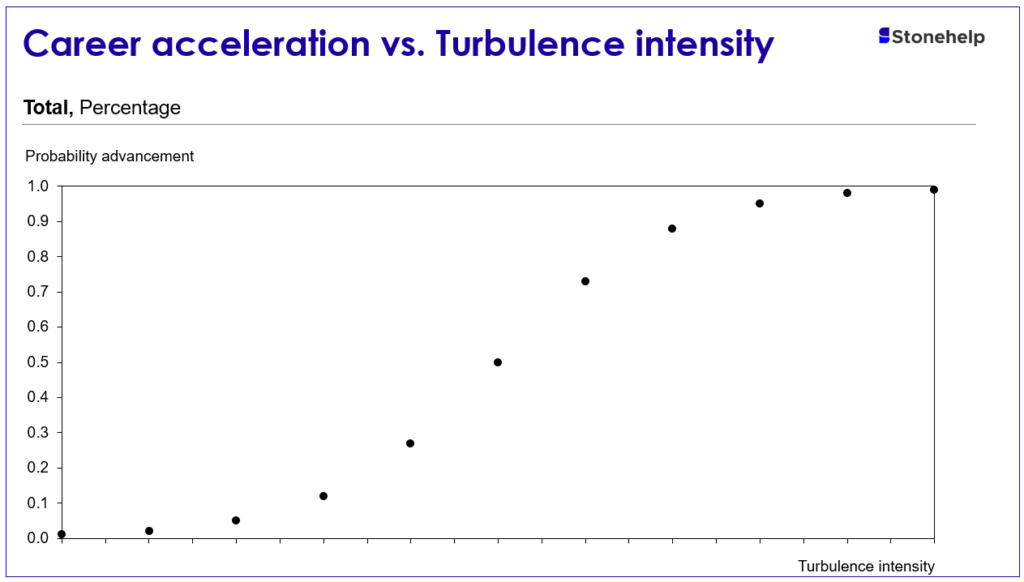
Career advancement during turbulent times requires more than just competence. Professionals must act strategically, demonstrate agility, and build influence. Those who communicate effectively, anticipate challenges, and step into leadership roles distinguish themselves from peers who retreat. Turbulence rewards initiative and decisiveness, not just technical skill.
In 2025, a finance professional at Maersk volunteered to integrate predictive analytics into budgeting and planning processes amidst economic headwinds. She analyzed fluctuating freight demand trends, identified high-risk shipping lanes, and recommended corrective cost-control measures. Executives leaned on her insights for strategic decisions, adjusting capacity, revising vendor contracts, and optimizing asset allocation. Within months, she received formal recognition, a promotion, and a seat at key planning discussions. Her success shows that decisive, data-driven action during uncertainty can fast-track both career growth and organizational influence.
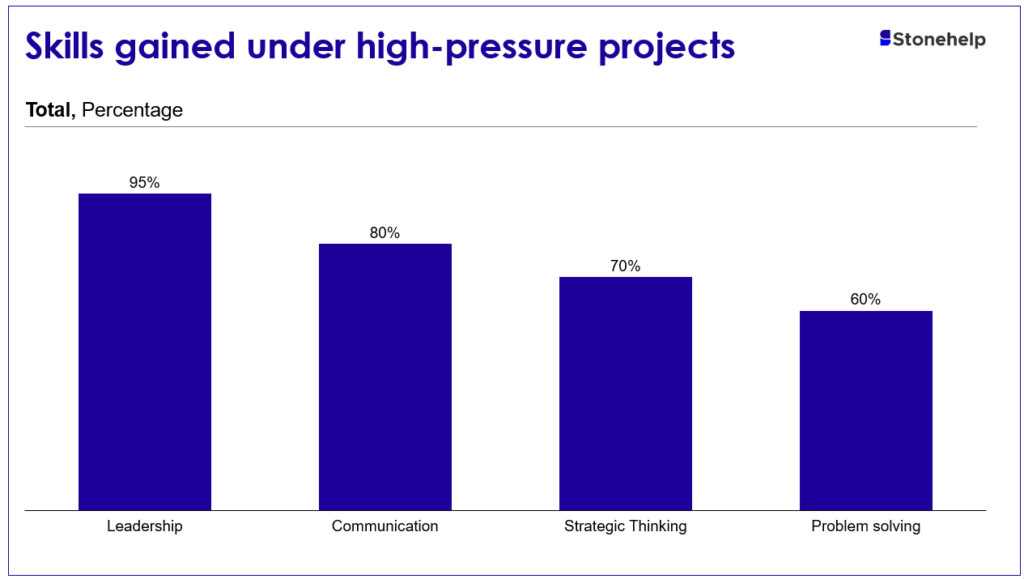
Turbulence also accelerates skill development in ways difficult to replicate in stable conditions. Professionals gain hands-on experience in crisis management, cross-functional collaboration, and data-driven decision-making. Every challenge becomes a practical training ground. Over time, these experiences compound, creating a portfolio of achievements that signals capability to senior leadership. Professionals who cultivate resilience and demonstrate results become indispensable, not because they avoided mistakes but because they adapted and learned rapidly.
Real-life examples confirm the point. Mattoni 1873, a Central European soft drinks company, recently worked with PwC to overhaul its client and internal reporting workflows, spanning finance, production, and supply chain functions. One project lead helped map out fragmented reporting, identify high-impact reports for automation, and set up standardized dashboards. Within months, Mattoni saw faster approvals, fewer errors, and noticeably improved user satisfaction with insights and reports. Beyond operational gains, the project lead’s visibility increased substantially: she was asked to help guide strategic reporting initiatives across countries, gaining broader influence. This shows that when firms undertake workflow redesign under pressure, individuals stepping into leadership around those changes can reap rapid professional growth and recognition.
Turning Challenges into Long-Term Career Leverage
Economic turbulence redefines leadership. Traditional markers such as tenure or formal title matter less when organizations require rapid adaptation. Leadership is now measured by the ability to make decisions under uncertainty, coordinate across departments, and execute initiatives with measurable impact. In 2025, professionals in technology, healthcare, and logistics sectors who embraced these behaviors were often fast-tracked into roles historically out of reach, gaining both influence and compensation.
Initiative and visibility form a self-reinforcing cycle. Professionals who step forward during crises attract attention, but recognition only translates into advancement when paired with competence and tangible results. Visibility enables greater responsibility, which provides further learning, leading to more recognition. The effect compounds, accelerating career trajectories far beyond what would occur in stable conditions.
Organizations are increasingly aware of the value of employees who thrive under pressure. In 2025, several firms across manufacturing, healthcare, and logistics adopted formal programs to identify and support high-potential employees during periods of disruption. These programs offered temporary leadership roles, project ownership opportunities, and mentorship for professionals demonstrating initiative. Employees who embraced these programs gained cross-functional exposure, honed strategic skills, and positioned themselves for accelerated career growth.
Turbulence also allows professionals to influence organizational culture. Those who act decisively, communicate openly, and foster collaboration set new standards for problem-solving. Their impact extends beyond individual performance metrics, shaping how teams approach challenges and adapt to future disruptions. Effectively navigating turbulence demonstrates both personal capability and the ability to lead transformation.
Risk remains an inherent part of stepping forward during uncertain times. Projects can fail, decisions can backfire, and temporary visibility may fade if outcomes do not materialize. Preparation, learning agility, and reflective practice mitigate these risks. Professionals who actively assess lessons from each challenge, solicit feedback, and iterate strategies enhance the long-term impact of their efforts.
Consider a manufacturing firm dealing with sudden component shortages. A mid-level engineer volunteered to design a contingency plan for production lines, collaborating with procurement, operations, and quality teams. Some measures initially failed, yet the iterative learning process created an optimized workflow that eventually became standard practice. The engineer’s visibility and credibility soared, and he was later promoted to a strategic operations role, illustrating how turbulence rewards adaptability and persistent problem-solving.
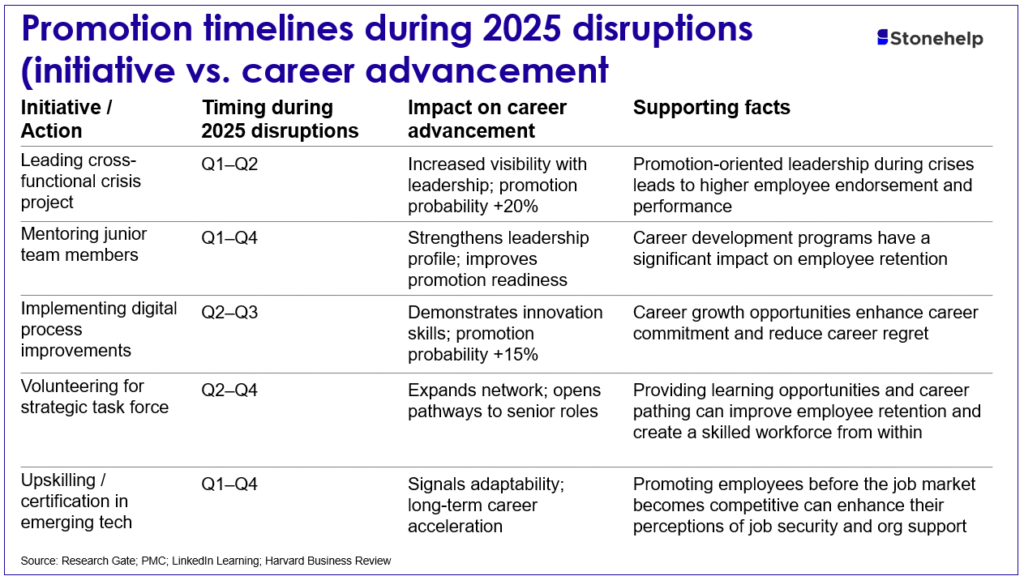
Ultimately, economic turbulence acts as a natural accelerator for careers. Professionals who approach uncertainty proactively transform challenges into opportunities. Experiences gained under pressure create a skill set, visibility, and influence difficult to achieve during stable periods. Turbulence becomes less a threat and more a catalyst for professional growth.
The events of 2025 show a simple principle: career acceleration often depends less on tenure or stability and more on the willingness to step forward when the stakes are highest. Professionals who embrace turbulence, demonstrate leadership, and deliver meaningful outcomes do more than survive; they thrive. Economic uncertainty offers a proving ground for the next generation of influential, high-impact professionals.
