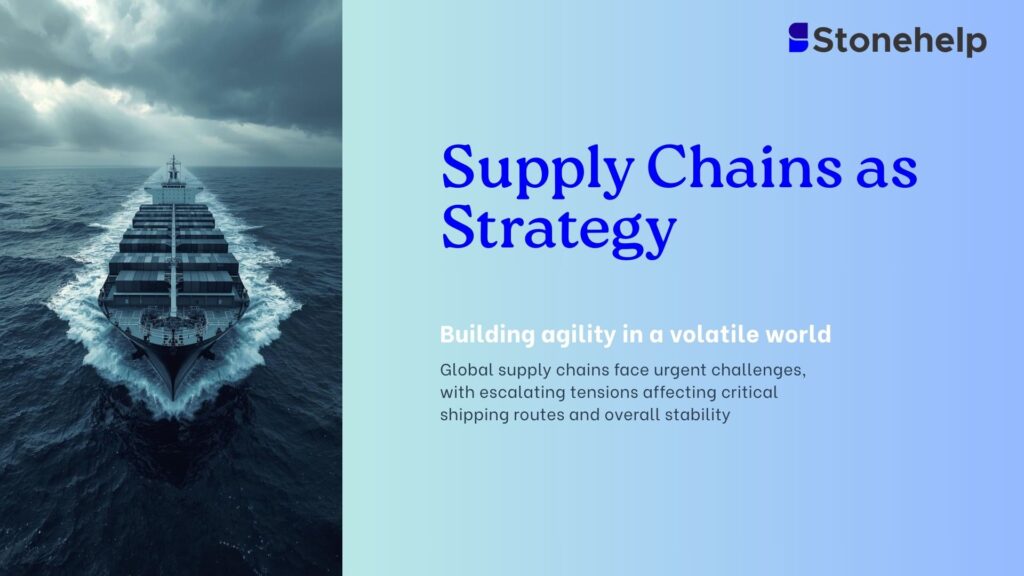
For decades, the supply chain was viewed as a back-office function. It was seen as an administrative task focused on moving products from point A to point B at the lowest possible cost. This approach worked in times of stability. But in today’s environment of inflation, trade tensions, climate shocks, and political uncertainty, that model is no longer enough. It is a direct threat to survival. Companies that still treat supply chains as routine operations are exposed to serious risk. To succeed, businesses must treat the supply chain as a central strategic pillar.
The main challenge for supply chain leaders has always been balancing speed and cost. If a company wanted speed, it paid more for air freight, local production, and higher stock levels. If it wanted lower costs, it relied on overseas manufacturing, ocean shipping, and lean inventory. For years, leaders chose one side and accepted the trade-off.
That trade-off is now outdated. Customers expect fast delivery. Investors expect stability. Governments are reshaping trade rules. Disruptions can happen suddenly. The new question is not whether to choose speed or cost. The question is how to achieve both.
Recent events show why this shift matters. Between 2025 and now, several global shipping routes faced delays due to ongoing security issues in the Red Sea and Strait of Hormuz. Companies that relied heavily on a single route struggled with longer lead times and higher freight costs. Others that had diversified routes and regional inventory were able to respond faster and protect margins. The difference was not luck. It was strategy.
We can also see this change in how leading retailers operate. Walmart has continued to invest heavily in supply chain automation and predictive analytics through 2024 and 2025. By using real-time data from stores and online platforms, it adjusts inventory before demand spikes. During severe weather events in the United States, it has been able to pre-position essential goods in affected regions. This reduces stockouts and protects both revenue and customer trust. This is strategic planning supported by data.
The main challenge for supply chain leaders has always been balancing speed and cost.
The Drivers of Supply Chain Transformations
The move from reactive to strategic supply chains is supported by digital tools and new operating models. These tools are not just about efficiency. They change how decisions are made
- Digital Procurement Platforms
Paper-based procurement and limited supplier visibility are fading. Modern digital platforms allow companies to map suppliers across regions, monitor risk, and switch sources more quickly. This became critical during recent trade tensions and sanctions in 2025. Firms that had clear digital oversight of tier two and tier three suppliers were able to identify exposure early. Those without visibility were forced to resort to emergency sourcing at a higher cost.
- AI Forecasting for Inventory and Demand
Traditional forecasting depends on past data. But past data does not always predict sudden changes in demand. AI systems now analyze social trends, weather patterns, and economic signals in real time. For example, Amazon continues to refine its forecasting systems to anticipate regional demand shifts. In 2025, as consumer spending patterns fluctuated due to inflationary pressures, the company used advanced analytics to quickly adjust fulfilment center allocations. This helped it maintain delivery promises while controlling excess inventory. Accurate forecasting protects cash flow and reduces waste.
- Supplier Relationship Management
Strategic supply chains depend on strong supplier partnerships. This goes beyond negotiating price. It involves shared planning, transparent data, and joint problem-solving. Toyota remains a strong example. After earlier global chip shortages exposed weaknesses across the automotive sector, Toyota deepened collaboration with key semiconductor suppliers. In the past months, it had strengthened long-term agreements and improved visibility in production schedules. This reduced vulnerability to sudden shortages. Trust communication became competitive advantages.
- Sustainability and Ethical Sourcing
Consumers and investors now expect responsible sourcing. This affects brand value and market access. Companies must show that their suppliers meet environmental and labor standards. Unilever has continued to embed sustainability targets into its procurement strategy. It works with suppliers to reduce carbon emissions and improve traceability. As regulatory pressure increased in Europe, especially last year, this proactive approach helped the company stay compliant and protect its reputation. Sustainability is no longer a public relations issue. It is a supply chain strategy.
- Reshoring and Nearshoring
Long global supply chains can reduce cost but increase risk. In recent years, many firms have moved parts of production closer to key markets. This reduces transport time and exposure to tariffs. Several technology and manufacturing firms expanded domestic production capacity in response to policy incentives and geopolitical risk. While direct labor costs may be higher, shorter supply lines improve control and reduce the impact of disruption. The calculation is strategic rather than purely financial.
- Digital Twins and Simulation
Digital twins allow companies to model their supply networks virtually. Leaders can test scenarios such as port closures or sudden demand increases. This improves planning and reduces surprises. Instead of reacting to crises, companies prepare for them.
The Strategic Impact of Supply Chain
When supply chains become strategic, the effects reach across the organization.
- Enhanced Resilience
Diversified suppliers, regional hubs, and data-driven forecasting reduce vulnerability. Companies can continue operating even when one link fails. This protects revenue and market share.
- Client Trust
Reliable delivery builds loyalty. When customers receive products on time, especially during difficult periods, trust grows. In competitive markets, reliability can be more valuable than small price differences.
- Improved Profitability
Strategic supply chains reduce emergency costs, excess inventory, and lost sales. They also help companies enter new markets with confidence. Profitability improves not only through cost reduction but through stability and growth.
Consider healthcare. Many hospital systems are now using predictive analytics to forecast patient admissions and manage medical supplies. Instead of reacting to shortages, they plan weeks ahead. This reduces waste, prevents stockouts, and improves patient care. The supply chain directly supports clinical outcomes.
Career Implication
This transformation is changing the role of supply chain professionals.
- Strategic leadership: Chief supply chain officers are now involved in major decisions such as expansion into new markets, capital investment, and risk management. Their insights shape corporate strategy. The function has moved from the back office to the boardroom.
- Essential skills: Modern professionals must understand data analytics, risk management, sustainability standards, and cross-functional collaboration. They must communicate clearly with finance, operations, and executive teams. Technical knowledge alone is not enough. Strategic thinking is essential.
Conclusion
Supply chains are no longer administrative systems focused only on cost control. They are engines of resilience, trust, and profitability. Recent disruptions have shown that weak supply chains can bring even strong brands to a halt. At the same time, companies that invest in digital tools, strong partnerships, and diversified networks are better positioned to compete. The lesson is clear. In a world marked by uncertainty and rapid change, supply chains must be designed not just for efficiency, but for strength and adaptability. Businesses that treat supply chain management as a strategic rather than routine administrative function will be the ones that endure and grow.